From Legacy to Liberation: Truth, Transformation, and a Collective Future
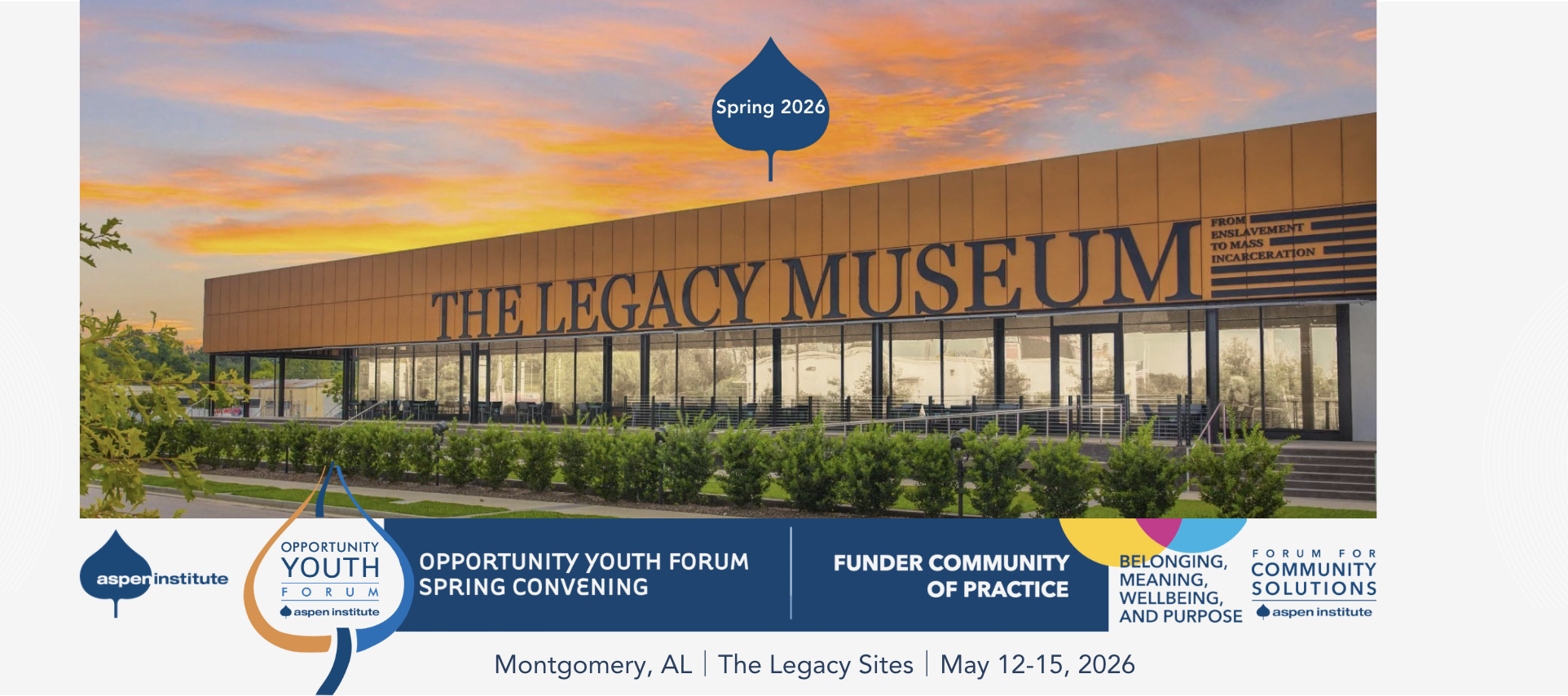
This Spring, the Opportunity Youth Forum (OYF) will gather in community at the Legacy Sites in Montgomery, Alabama—a place where the past is not distant, but present; where the ground itself carries memory; and where the story of the United States is etched in truth-telling that refuses silence.
This gathering is not simply a convening.
It is a journey.
A journey toward truth. Toward remembrance. Toward healing. And toward the renewal of our shared responsibility to young people, to community, and to one another. It is an invitation to history, healing & hope.
Across the Opportunity Youth Forum network, we work to transform the systems that shape opportunity in this country—education, workforce, justice, health, our civic infrastructure, and the broader institutions that determine whether young people can meaningfully live, learn, belong, work and thrive. Yet beneath every system are human stories: stories of struggle and resilience, exclusion and belonging, loss and possibility, stolen dignity and liberation, historical disinvestment and transformative opportunity, marginalization and collective healing, love and grief. To understand the present moment—and rebuild toward a more equitable future—we must begin not only with policy or structure, but with memory and the courage of truth-telling.
Montgomery invites us into that beginning.
We come to Montgomery in a moment of profound uncertainty and divides across our nation. Around the country, hard-won progress toward racial equity and civil rights is being questioned, restricted, and in many cases rolled back. At the same time, communities continue to organize, dream, and build toward a more just future.
Gathering in Montgomery is therefore not only symbolic but necessary—as this moment asks something more of us, collectively. We are honored to invite a diverse community of OYF network members to gather in Montgomery from May 12–15, 2026. Together, we will visit the Equal Justice Initiative’s Legacy Sites to encounter our shared history and reflect on how the past continues to shape our present—including the future of our democracy, our communities, and our young people.
The Historical Present Weight of History – the past continues to live with our present
The American story is inseparable from histories of enslavement, racial terror, displacement, and exclusion. These consequences continue to shape lives and systems today. From the institution of slavery and the racialized systems that followed—Jim Crow segregation, disenfranchisement, and mass incarceration—to the persistent inequities shaping access to education, economic mobility, safety, and belonging today, the past continues to live within our present. These forces have disproportionately shaped the lives of Black, Brown, Indigenous, immigrant, and other marginalized communities, and they remain deeply connected to the conditions that disconnect millions of young people from opportunity.
These histories are not abstractions. They live in neighborhoods, schools, courtrooms, and workforce environments. They shape who is safe, who is seen, who is heard, who has access to opportunity, and who belongs. They also shape the lives of millions of young people across our country—especially those pushed to the margins of education and employment not by lack of talent or aspiration, but by the accumulated weight of structural injustice and economic inequality.
Truth-telling mirrors our country and its present-state back to itself, revealing how institutions were shaped, whose voices were excluded, and why dismantling inequity requires more than incremental change. It requires remembering. Rebuilding our futures and collective healing—whether for individuals, communities, or nations—begins when truth is told and acknowledged.
The legacy museums in Montgomery embody this act of remembrance. Through powerful art, visual storytelling, archival record, and the voices of resistance and resilience, these spaces trace the continuum from slavery to the modern justice system—illuminating how history’s stain endures while also honoring the courage of those who struggled for freedom. They remind us that “hopelessness is the enemy of justice, and that memory itself is a form of resistance,” Bryan Stevenson, founder of the Equal Justice Initiative (EJI).
Our Collective Journey Toward Equity, Belonging, and Healing
For more than a decade, the Aspen Institute Forum for Community Solutions and the Opportunity Youth Forum have worked alongside young people and communities nationwide to dismantle systemic barriers that prevent youth from accessing opportunity, wellbeing, and belonging. From the beginning, this work has been rooted in racial and structural equity, shaped by the understanding that youth disconnection is not an individual failure but the predictable outcome of systems that were never designed to serve all young people.
Across the country, OYF collaboratives are transforming education and workforce pathways, investing in holistic supports, elevating youth leadership, and building cross-sector partnerships to transform fragmented systems into sustainable socio-economic mobility pathways. This work reflects a deeper commitment: not only to reconnect young people to opportunity, but to help build a society where opportunity is no longer determined by race, place, or circumstance — all rooted in the belief that every person deserves to participate, prosper, and thrive in society and beyond.
Gathering in Montgomery represents a pivotal chapter of pause, remembrance, and reflection—a meaningful turning point within our shared journey together.
Over the years, OYF convenings have centered themes of racial justice, democratic belonging, love, healing, and collective liberation. Artists, young leaders, practitioners, and scholars across our network have called us to imagine systems rooted in dignity rather than punishment, care rather than exclusion, and solidarity rather than othering. Past OYF convening speakers and leaders in the field such as Dr. Shawn Ginwright, Arnold Chandler, Desmond Meade, among others, have guided us to understand the interwoven complexities that shape, and meaningfully connect, our past, present, and future.
Dr. Shawn Ginwright, articulated the healing justice vision through healing-centered frameworks that have deepened our understanding that lasting systems change must also be relational, cultural, and soul-deep. Arnold Chandler, has guided us toward a deeper understanding of structural racism, including its presence across our communities, institutions, and in everyday society. Desmond Meade, enlightened us with how democratic processes work in light of restoring voting rights and civic participation. These leaders, along with many others, have helped shape collective learning. These and many other visionary voices have graced our convenings over the years—inviting us to look honestly at the past so we may more clearly imagine and build the just futures our communities and young people deserve.
See featured content from past convenings in the appendix below, that informs our learning arc.
The Experience We Will Create Together – Montgomery as Sacred Ground for Truth-Telling
In Montgomery, truth is made visible. This convening is designed as an immersive collective journey of learning, reflection, and collective imagination—one that moves through remembrance toward renewal. Participants will engage with history not as distant observers, but as witnesses whose present-day work is part of an unfolding story. Through guided museum visits, facilitated dialogue, artistic and cultural expression, and intentional space for personal and collective reflection, breathing, and healing, the experience will cultivate:
- Historical grounding that connects structural racism to present-day systems through storytelling
- Shared community and reflection that honors grief, resilience, resistance, love, and hope
- Healing-centered community rooted in belonging, trust, relational solidarity and mutual care
- Strategic imagination and courage to bear witness, dismantle inequities, and transform systems to expand opportunity
At the Legacy Museum, visitors walk through four centuries of American history—from the transatlantic slave trade to the modern crisis of mass incarceration—encountering stories carried through testimony, art, and memory. On the site of a former cotton warehouse where enslaved people were once forced to labor, the museum invites us to witness lives too often erased from public narrative.
At the National Memorial for Peace and Justice, more than 4,400 victims of racial terror lynching are named. Steel columns hang in quiet formation, each representing a county where lynching violence occurred. Standing among them, the immense moral weight of remembrance is present.
At the Freedom Monument Sculpture Park, overlooking the Alabama River where enslaved people were trafficked, art and landscape create space for reflection on courage, love, resistance, and survival.
Together, these sites form more than a museum complex. They are a place of pilgrimage. A transformative space that invites us into a journey of remembering as an act of courage. A call to conscience. Truth is spoken aloud and shared in community. And in doing so, they open the possibility of collective healing and reconciliation.
In walking these grounds together, we affirm that our work for young people is inseparable from the histories that shaped the present—and from the futures we are called to build.
“History, despite its wrenching pain, cannot be unlived, however, if faced with courage, need not be lived again.” – Maya Angelou
Featuring Keynote By Mr. Bryan Stevenson
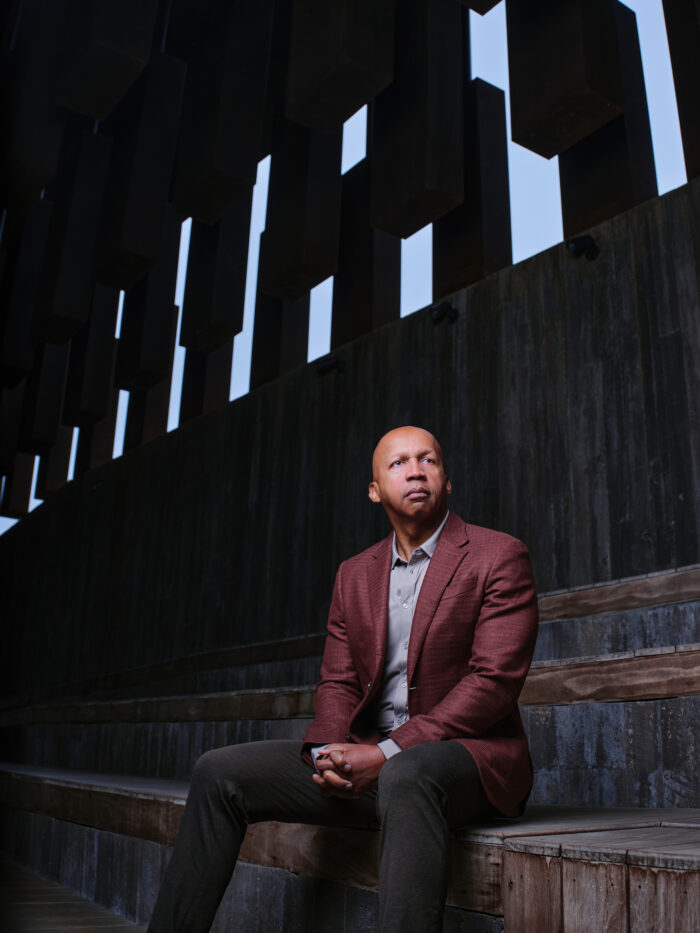
Bryan Stevenson is a widely acclaimed public interest lawyer who has dedicated his career to helping the poor, the incarcerated, and the condemned. Mr. Stevenson is the founder and Executive Director of the Equal Justice Initiative, a human rights organization in Montgomery, Alabama. Under his leadership, EJI has won major legal challenges eliminating excessive and unfair sentencing, exonerating innocent death row prisoners, confronting abuse of the incarcerated and the mentally ill, and aiding children prosecuted as adults.
Mr. Stevenson has initiated major new anti-poverty and anti-discrimination efforts that challenge inequality in America. He led the creation of EJI’s highly acclaimed Legacy Sites, including the Legacy Museum, the National Memorial for Peace and Justice, and Freedom Monument Sculpture Park. These new national landmark institutions chronicle the legacy of slavery, lynching, and racial segregation, and the connection to mass incarceration and contemporary issues of racial bias.
Mr. Stevenson has received over 50 honorary doctoral degrees, including degrees from Harvard, Yale, Princeton, the University of Pennsylvania, and Oxford University. He is the author of the critically acclaimed New York Times bestseller, Just Mercy, which was named by Time Magazine as one of the 10 Best Books of Nonfiction for 2014 and has been awarded several honors, including the American Library Association’s Carnegie Medal for best nonfiction book of 2015 and a 2015 NAACP Image Award. Just Mercy was adapted as a major motion picture and the film won the American Bar Association’s 2020 Silver Gavel Award as well as four NAACP Image Awards. Mr. Stevenson is also the subject of the Emmy Award-winning HBO documentary True Justice. He is a graduate of the Harvard Law School and the Harvard School of Government. Read More.
Featuring Mindfulness Practice with Navasha Daya, and Madison Barney
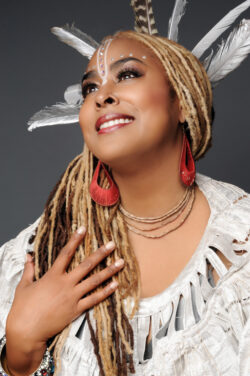
Called an “astral soul goddess” by Mojo Magazine (UK), Navasha Daya (nah-Vah-sha Day-ya) is an exceptionally gifted and seasoned recording and performing artist, songwriter, singer, composer, producer, arranger, choreographer, curator, and committed cultural arts activist who is internationally known as a breathtaking performer.
In addition to her celebrated music career, Navasha is a wellness facilitator and transformation guide who offers learning experiences for the mind, body, and spirit. Grounded in respect for diverse spiritual traditions, faiths, and world cultures, she has studied an array of healing centered practices and uses both her spiritual and artistic training to support reflection, renewal, and personal growth. Through mindfulness, grounding, centering, and creative expression, she creates spaces that nurture healing, empowerment, and inner balance. Read More.

Madison Murphy Barney is a Shoshone and Hoopa sister, partner, author, story-led strategist, and doula across all of life’s thresholds. She is the founder of The Center for Story & Strategy and Muungas Doula Services. Madison believes greif is a potent, creative, and generative force when held in community.
Her work with grief has ranged from care coordination for the Vermont Truth and Reconciliation Commission, hosting a Grief & Cake group, and doula support for individuals and groups experiencing loss and transformation. She is the author of the forthcoming book Our Ancestors Want Us to Be Mushrooms, an exploration of the teachings of fungi for moving back into right relationship with ourselves, each other, and our planet. Read More.
This gathering is part of our program’s 2026 learning arc — a year of healing-centered unconvenings. We begin at the Legacy Sites with collective witnessing and reflection on the histories of colonization and slavery and their ongoing impact. Later in the year, we will continue this arc in Hawai‘i, where we will explore healing, interconnection, and systems rooted in place and culture. Importantly, we will gather Opportunity Youth Forum partners, funders in the Belonging, Meaning, Wellbeing and Purpose Community of Practice, and young leaders, in a shared intergenerational experience rooted in collective healing and transformation.
As capacity at the Legacy Sites is limited, we are prioritizing participation from across OYF network collaboratives, our funder network, and partners. For more information visit: legacysites.eji.org/
Looking Back to Look Ahead:
Arnold Chandler
OYF Convening Fall 2015 Plenary: Countering Adversity
OYF Convening Fall 2019: Native American Youth: Building Resilience through Action and Culture
Desmond Meade
OYF Fall 2019 Convening Lunch & Afternoon Plenary: Our Greatest Civil Rights
Dr. Ginwright
OYF Fall 2018 Convening: Morning Plenary Session: “ Healing Centered Engagement ”
OYF Fall 2025 Convening Plenary: Rooted In Restoration: Healing As The Foundation For Transformation