 The Opportunity Youth Forum is a national network that includes over 40 place-based collaboratives involving some 900 organizational partners and serving over 200,000 young people annually. It is dedicated to the development and success of all young people, 16 to 24 years old, with a focus on those who’ve been the least well-served by the education, workforce and other systems meant to support them.
Currently:
- 8 million young adults aged 16-24 live in OYF communities;
- of them, 3 million are unsupported by misaligned education and workforce systems;
- and another 900,000 are completely disconnected from both education and work.
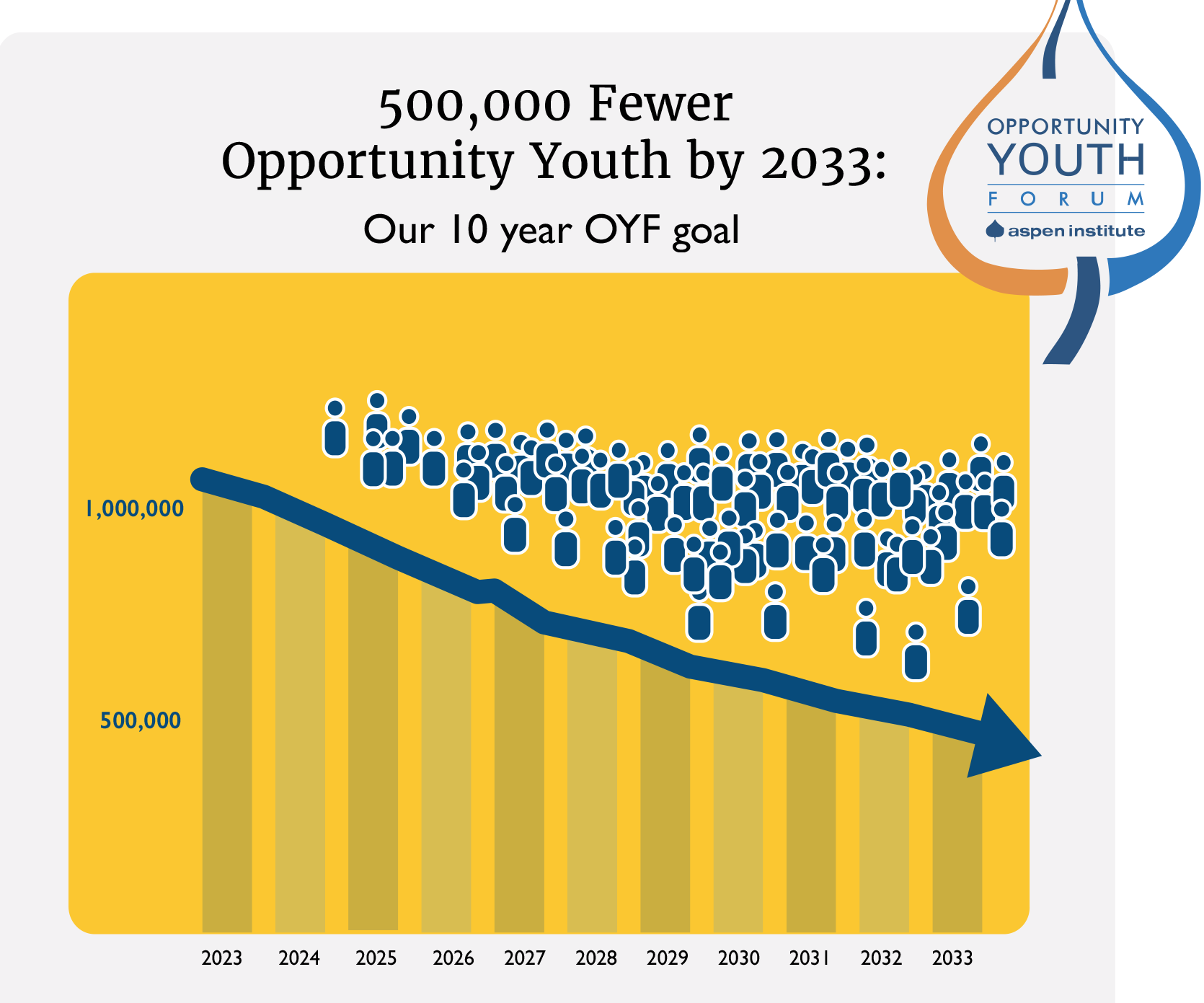
To address this challenge, the OYF has set a ten year goal to increase youth educational and workforce attainment, and reduce youth disconnection in OYF communities by 500,000 young people (a 50% reduction) – that’s hundreds of thousands of the least well-served young people getting educational credentials and good jobs. These supports are urgently needed; the economic cost of these 900,000 disconnected youth in OYF communities is estimated at $17 billion each year.
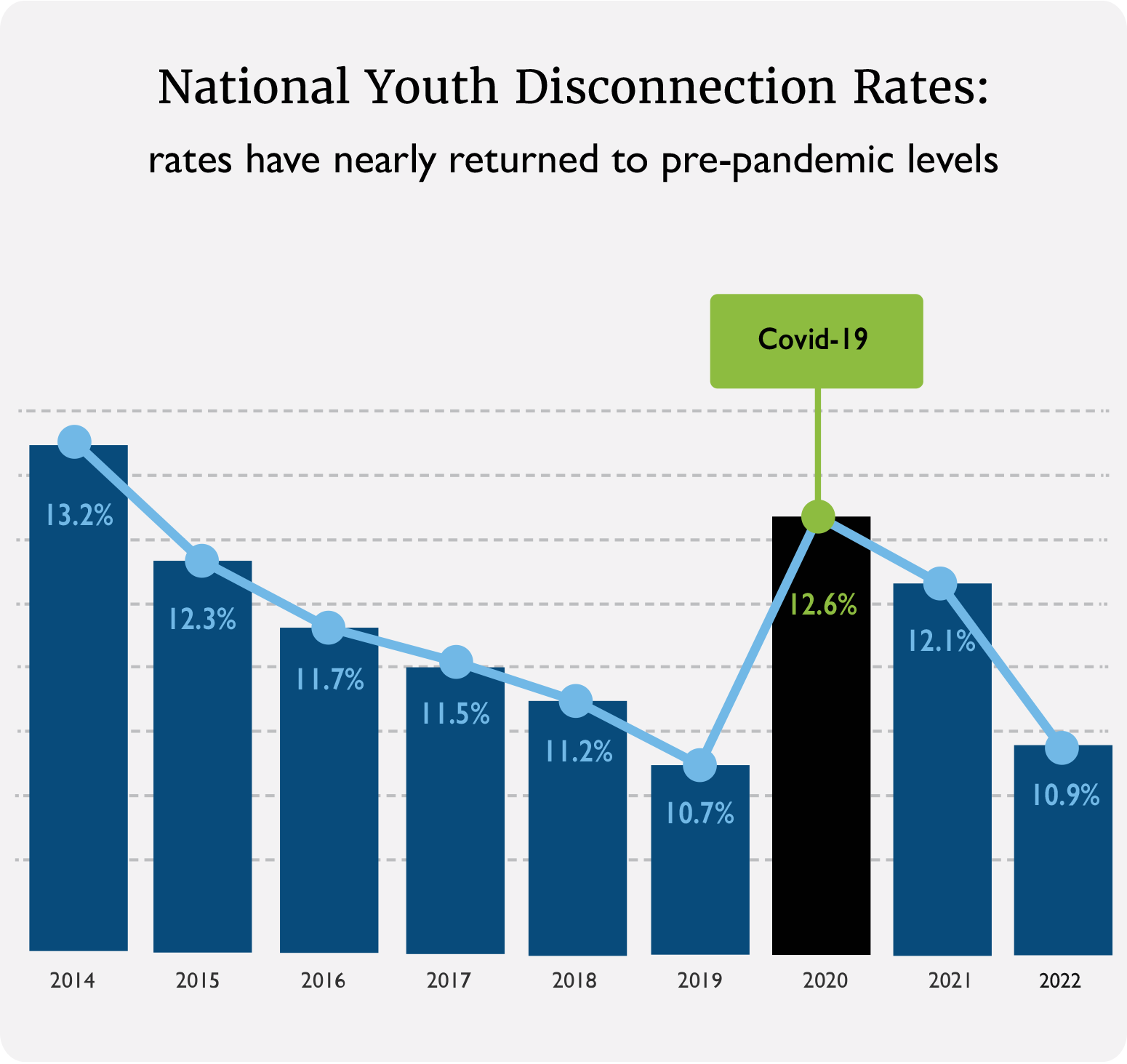
Our work is ambitious, but the movement for OY has seen large reductions in youth disconnection before: in our first 10 years, we saw a nation-wide reduction of 1 million disconnected youth.
To make our new goal happen, our network operates at the needed scale: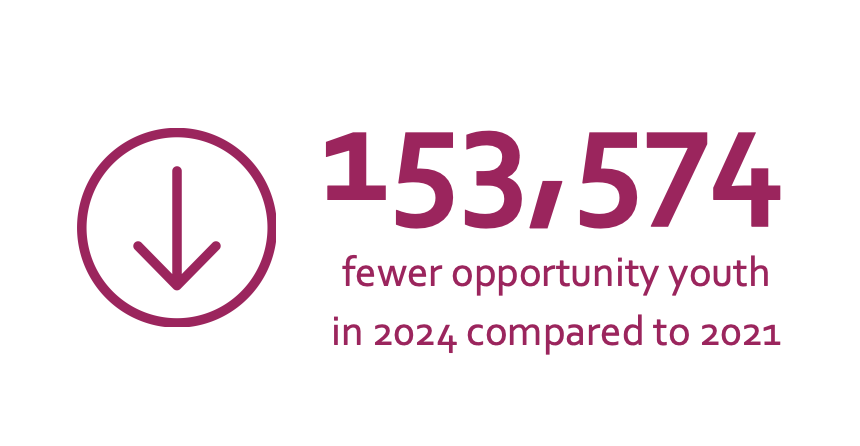
- 230,000 youth received supports from OYF partners in 2024, and 60,000 disconnected youth were connected to education and jobs.
- Because OYF partners connect opportunity youth to education and jobs, these communities saw economic savings and benefits of $440 million in 2024 alone.
- OYF communities are on track to reduce youth disconnection by 50% by 2033, attaining to date a 14% reduction in disconnection (or 150,000 fewer OY) in just the first three years of our new 10 year plan.
The Opportunity Youth Forum’s Approach to Change
OYF member communities are a network of over 40 place-based urban, suburban, rural and tribal community collaboratives, all working to improve outcomes for youth. These place-based local collaboratives bring together many kinds of education, workforce, and social services institutions and providers to create better futures for young adults.
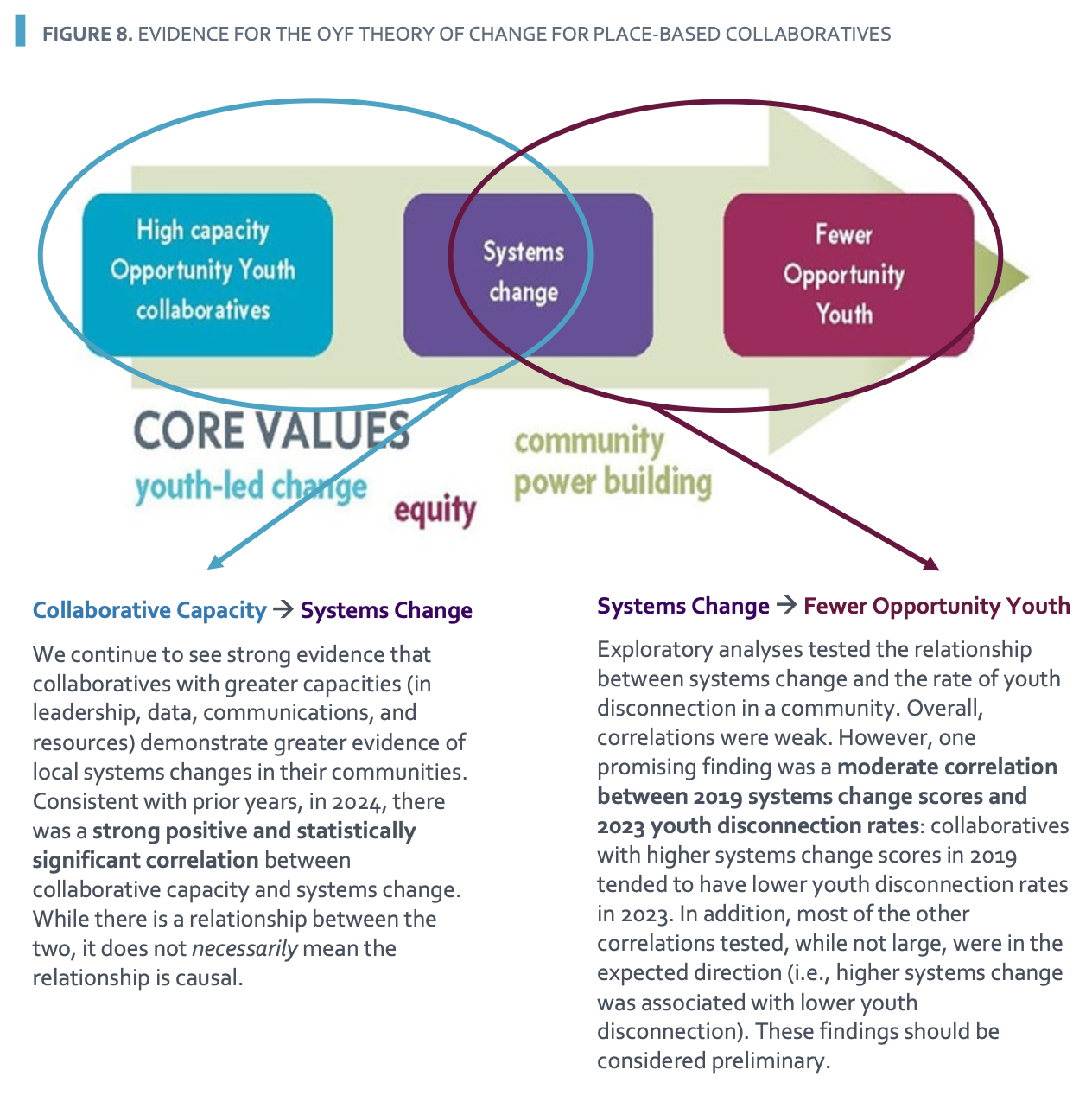
OYF believes that strong collaboratives can influence local systems to change, which will drive improvements in youth outcomes, and that all this work must be based in values prioritizing youth and impacted community members to be leaders in equity-focused ways of working. Further, annual assessments of OYF place-based partnerships has validated that higher capacity collaboratives do results in greater systems changes. And preliminary data shows a promising relationship between greater systems changes, and, ultimately, greater improvement in youth outcomes.
Local Collaboratives Lead the Way
OYF collaboratives, which are proven to be successful through independent evaluations, focus on improving local programs and changing the systems and policies that have an impact on the lives of young people. And research shows that investment in opportunity youth collaboratives increases other public funding for young adults.
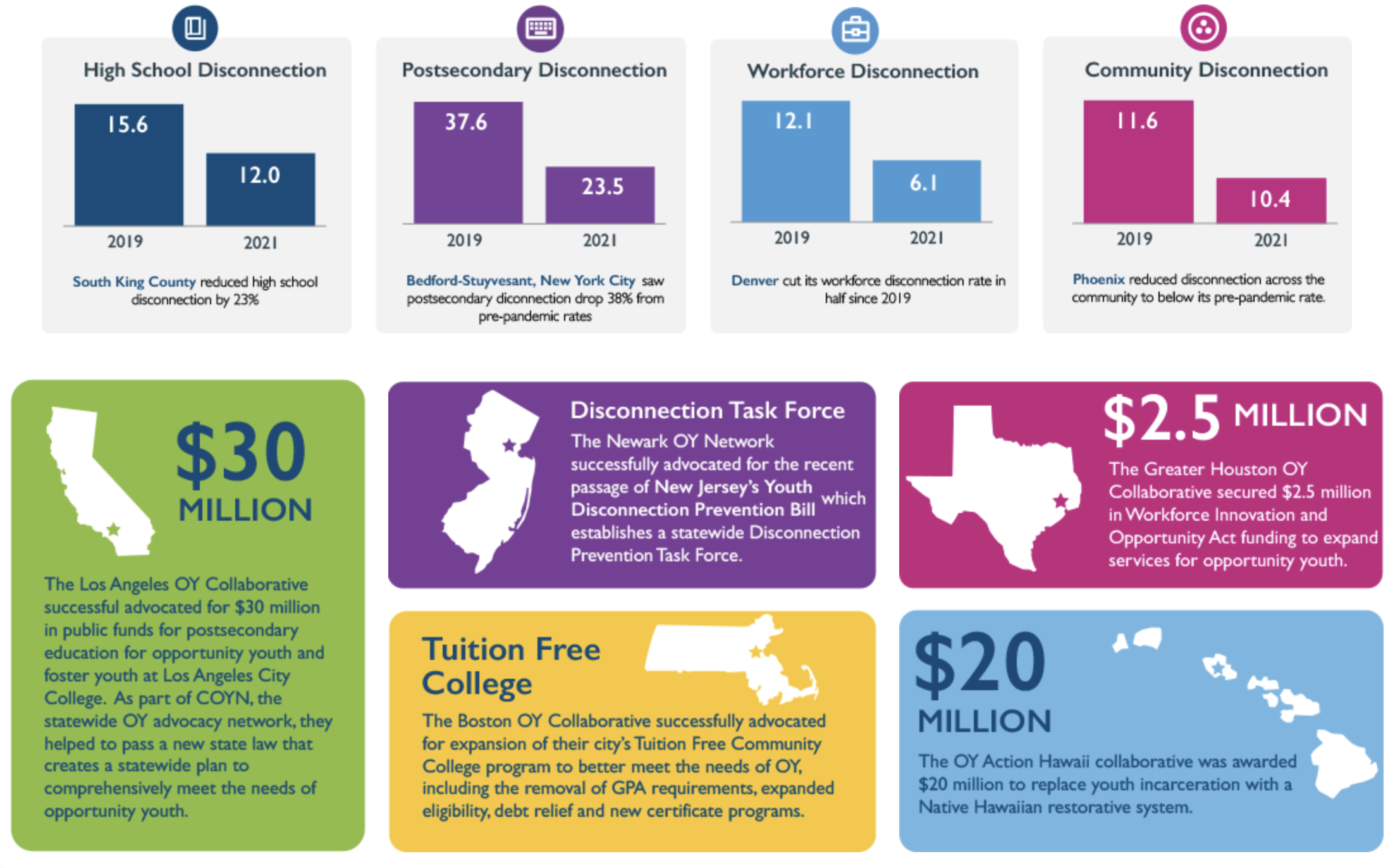
Evidence shows that strong local opportunity youth collaboratives are essential to making this progress happen. OYF collaboratives bring together local communities to enhance programs and policy that ultimately lead to improved youth outcomes. Recent success of local OY collaboratives include improvements in youth outcomes and changes to funding and policy related to opportunity youth.
How We Track Impact in the OYF
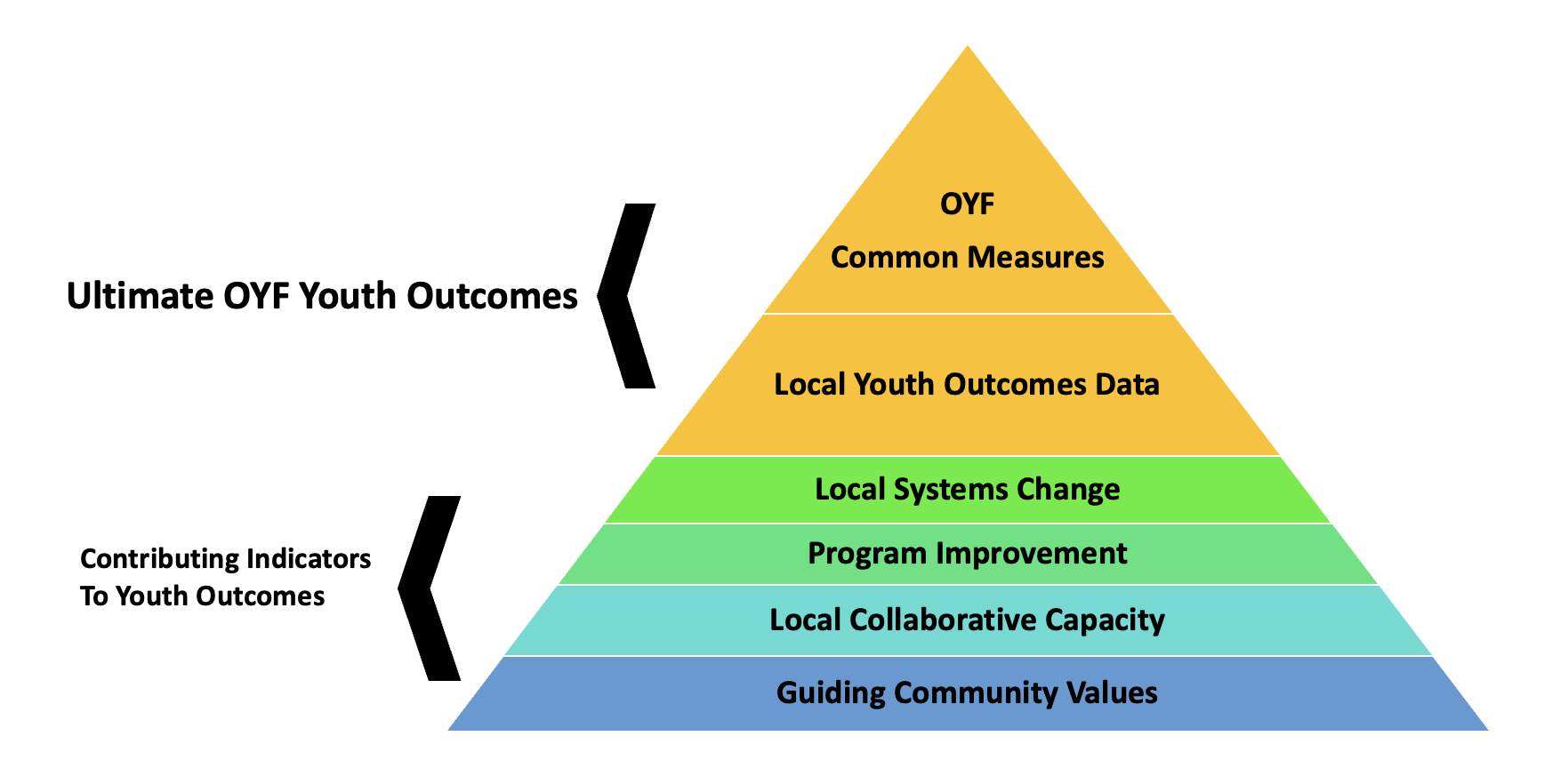 We track a large number of youth outcomes and other leading indicators of change in individuals and communities in the OYF.
Using a variety of data sources and assessment methods allows us to understand in greater depth what changes are happening for youth and in communities. In brief, these annual data sources include:
- Data on opportunity youth numbers and characteristics, at the community level, from the US Census Bureau.
- Data from OYF collaborative partners on the numbers of youth they serve and their outcomes.
- Data on the characteristics and capacities of each OYF collaborative.
- Data on changes to local programs and systems in each OYF community.
Please see our OYF Assessment and Evaluation page for more details.