America at 250: The United States Belongs to All of Us
The OYF National Network Gathering at the Equal Justice Initiatives’ Legacy Sites in Montgomery, Alabama
As the United States commemorates its 250th anniversary, communities across the country are reflecting on the nation’s past while imagining its future. This spring, the Opportunity Youth Forum gathered in Montgomery, Alabama, to experience the fuller, more complete American story — one rooted in truth-telling, proximity, healing, repair, and a shared responsibility to intentionally build a more expansive and inclusive next chapter of our democracy in solidarity across communities and in partnership with young people.
The Stories We Choose to Tell: Bearing Witness in Montgomery
Every nation tells stories about itself. Some stories celebrate remarkable achievements. Others honor moments of courage, sacrifice, and progress while others challenge us to confront difficult truths — truths that inform our understanding of who we have been, who we are, and who we aspire to become.
The American story has never been a single narrative. It is a living tapestry that belongs to the multitude of diverse voices, lived experiences, and histories of the people who call this country home. Stories of hope and hardship. Of liberation and racial terror. Of extraordinary courage alongside extraordinary injustice. All woven together by generations of people who have shaped and continue to shape what this nation is, and what it might yet become.
This Spring, across several days, young leaders, community practitioners, organizers, artists, researchers, philanthropic partners, and national network partners of the Opportunity Youth Forum’s national network gathered in Montgomery — a collective journey through time, where we traced the history of racial injustice and reckoned with the legacies of slavery, colonization, Jim Crow, and mass incarceration, while grounding ourselves in the power of proximity and place.
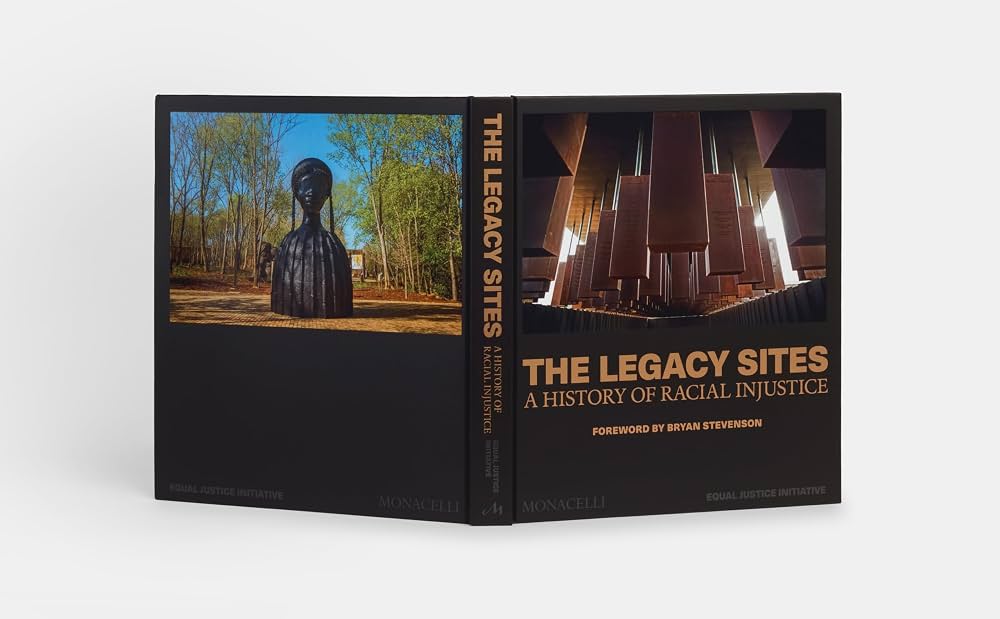
The Legacy Museum, the National Memorial for Peace and Justice, Freedom Monument Sculpture Park, and Montgomery Square leap beyond documenting our nation’s history. Through testimony, art, archival records, movies, sculpture, and immersive storytelling, the Legacy sites reveal how the past continues to shape the present and why honest and accurate retelling of our shared history is essential to imagining a different future, and a prerequisite to healing.
Few American cities embody the complexities of our national story as profoundly as Montgomery. Here, the histories of slave-trade, racial terror, segregation, resistance, and the Civil Rights Movement exist not as isolated chapters but as interconnected threads woven into the landscape itself. Walking its streets is to encounter both the tremendous harm that has shaped our nation and the extraordinary courage of people who refused to allow that harm to define its future.
“Walking through the legacy sites in Montgomery was both painful and profoundly empowering. Each step honored those who endured unimaginable injustice, while reminding us how far we’ve come and how much work remains. We are the answer to our ancestors’ prayers—carrying forward their dreams and becoming the future they imagined possible.”
— Eisha Khan, MaineHealth, The SHAW Challenge
For our network, this milestone gathering offered an opportunity to reflect on another question:
What kind of nation are we asking the future generations to inherit—and what responsibility do we share in shaping it together?
Montgomery did not simply invite us into deeper conversations about truth, healing, and our shared responsibility to strengthen our democracy. It asked what history now requires of us. The future of our democracy depends not only on the institutions we build, but how we choose to heal, and the stories we choose to tell.
Stories about who belongs. Stories about whose voices matter. Stories about whose brilliance is recognized and whose humanity is affirmed. Stories that allow for collective intergenerational healing. Stories about how we redistribute power and agency to young people and communities to be protagonists of their own lives. Stories about the past we must acknowledge and the future we are willing to imagine together. Stories that recognize what history has long shown us: that young people have never simply inherited movements — they have been among its architects. From the Civil Rights Movement to the movements shaping our communities today, young people have consistently been at the forefront of imagining futures that others could not yet see with their steadfast courage, conviction, and leadership.
Keynote with Bryan Stevenson: Healing Begins with Truth & Meaningful Change Begins with Proximity
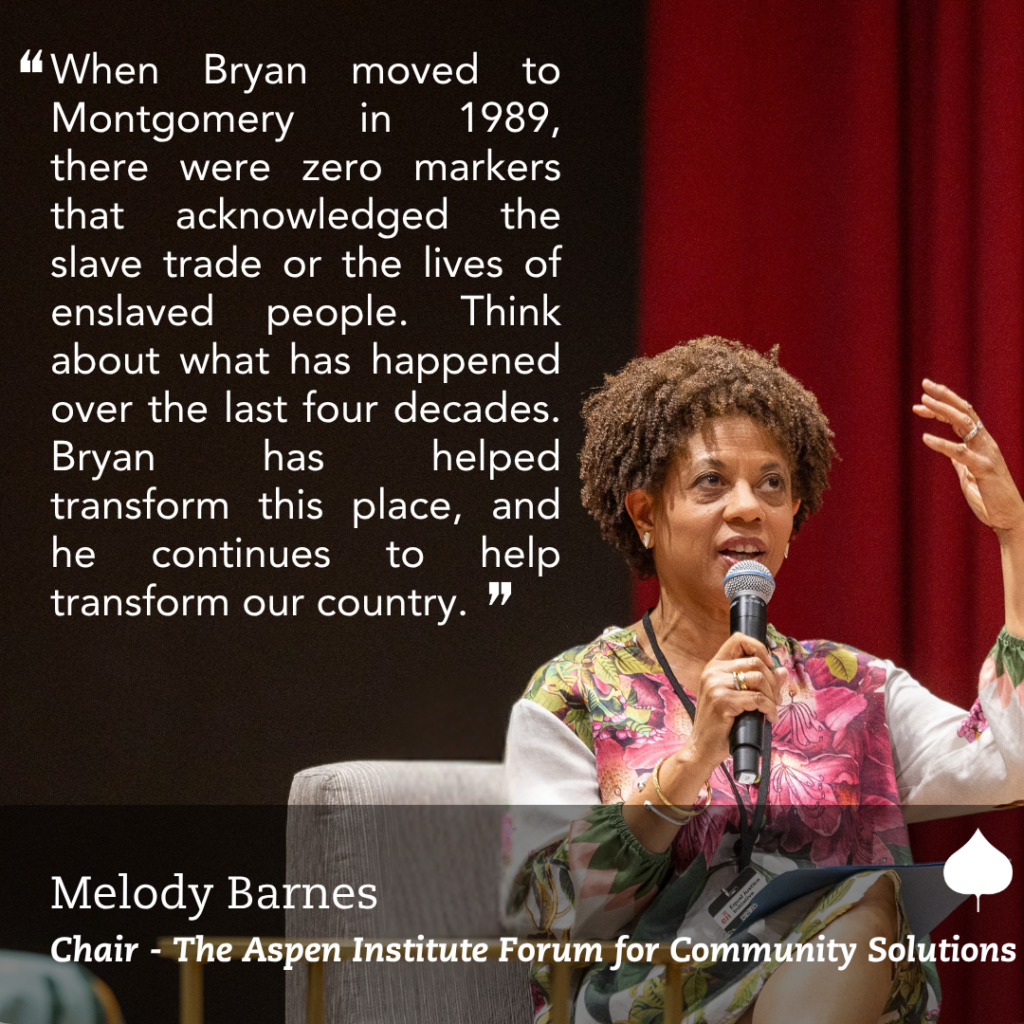
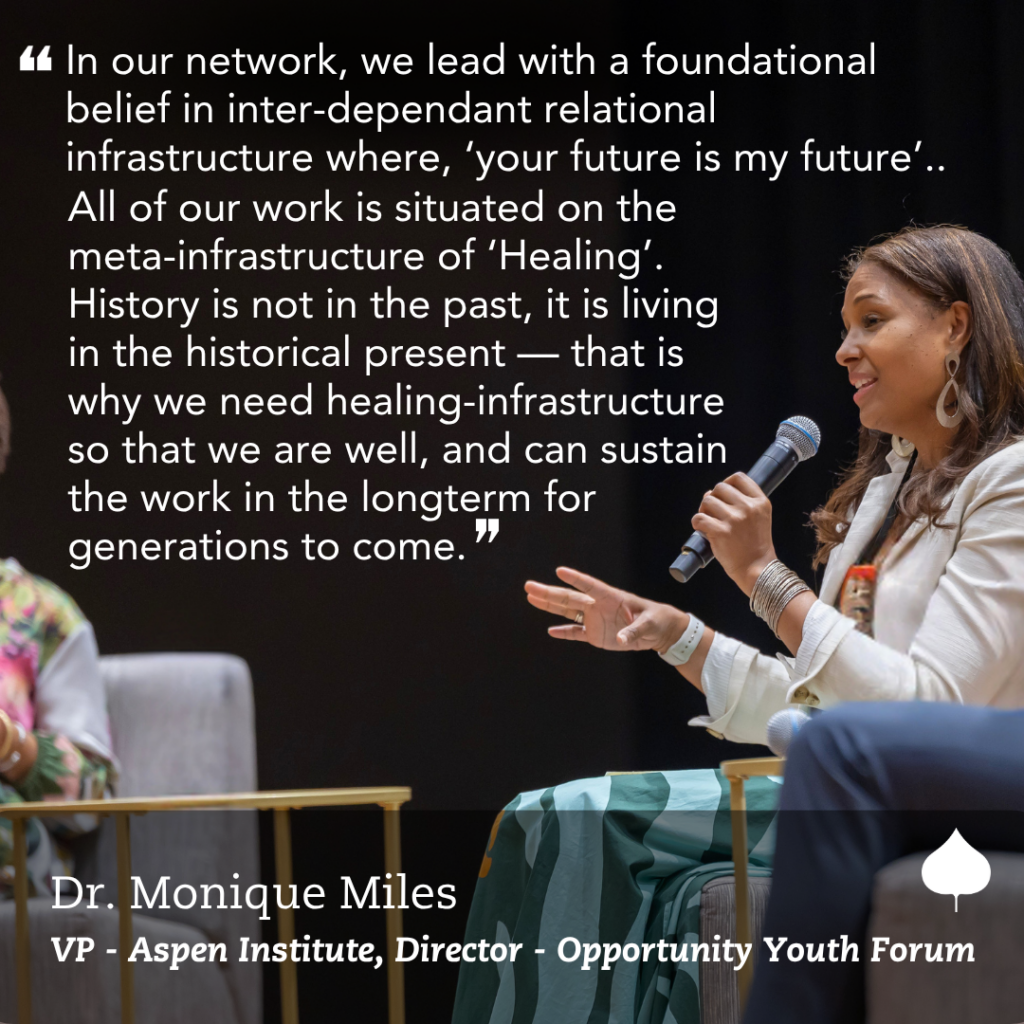
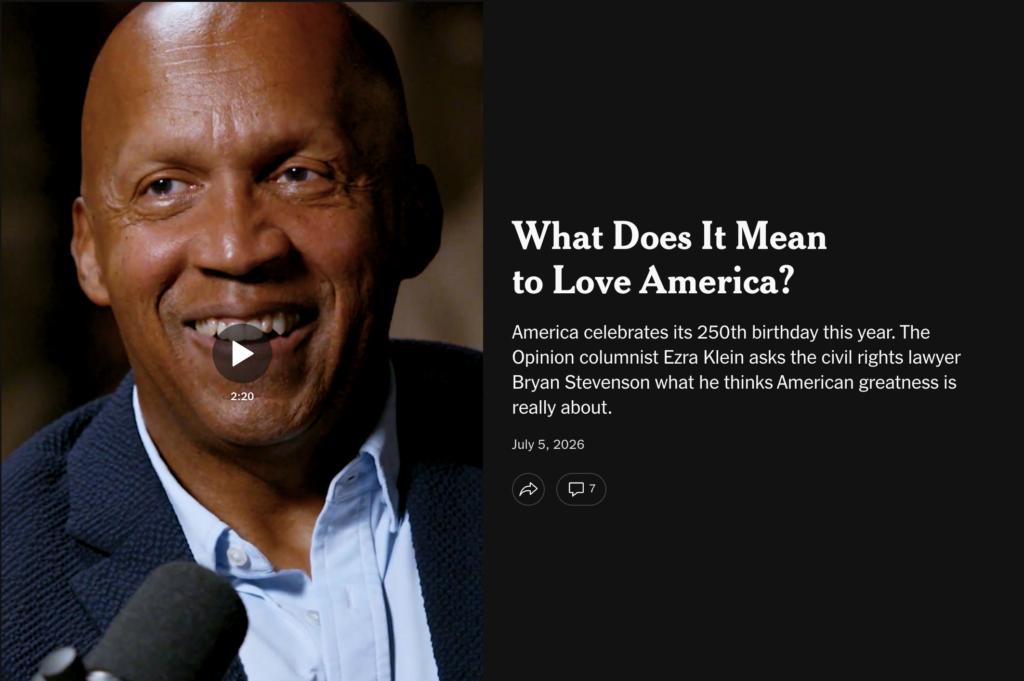
After several days of experiencing our nation’s complex history through the immersive journey of the Legacy Sites, our network had the honor and privilege to engage in conversation with Bryan Stevenson, widely acclaimed lawyer, author, and the Founder and Executive Director of the Equal Justice Initiative. The keynote featured Bryan Stevenson, in dialogue with Dr. Monique Miles, VP Aspen Institute, and Director OYF, alongside Melody Barnes, Chair AIFCS.
This transformative panel drew us further into our experience of the Legacy Sites, and offered teachings that echoed throughout our time in Montgomery, and will stay with us for the rest of our lives.
The panel reminded us of two simple yet demanding convictions:
(i) Healing is impossible without truth; and
(ii) Meaningful change begins with proximity
Bryan invited us to resist the temptation to move too quickly toward reconciliation without first reckoning honestly with history. He shared that repair cannot happen where harm has not been acknowledged, and hope cannot be sustained where truth remains hidden.
Bryan emphasized the importance of getting proximate. He shared that proximity is an expression of our shared humanity. Not proximity measured by geography. But by relationship. By humility. Drawing near to those who have been excluded allows us to better understand both the systems that have caused harm and the relationships capable of creating healing.
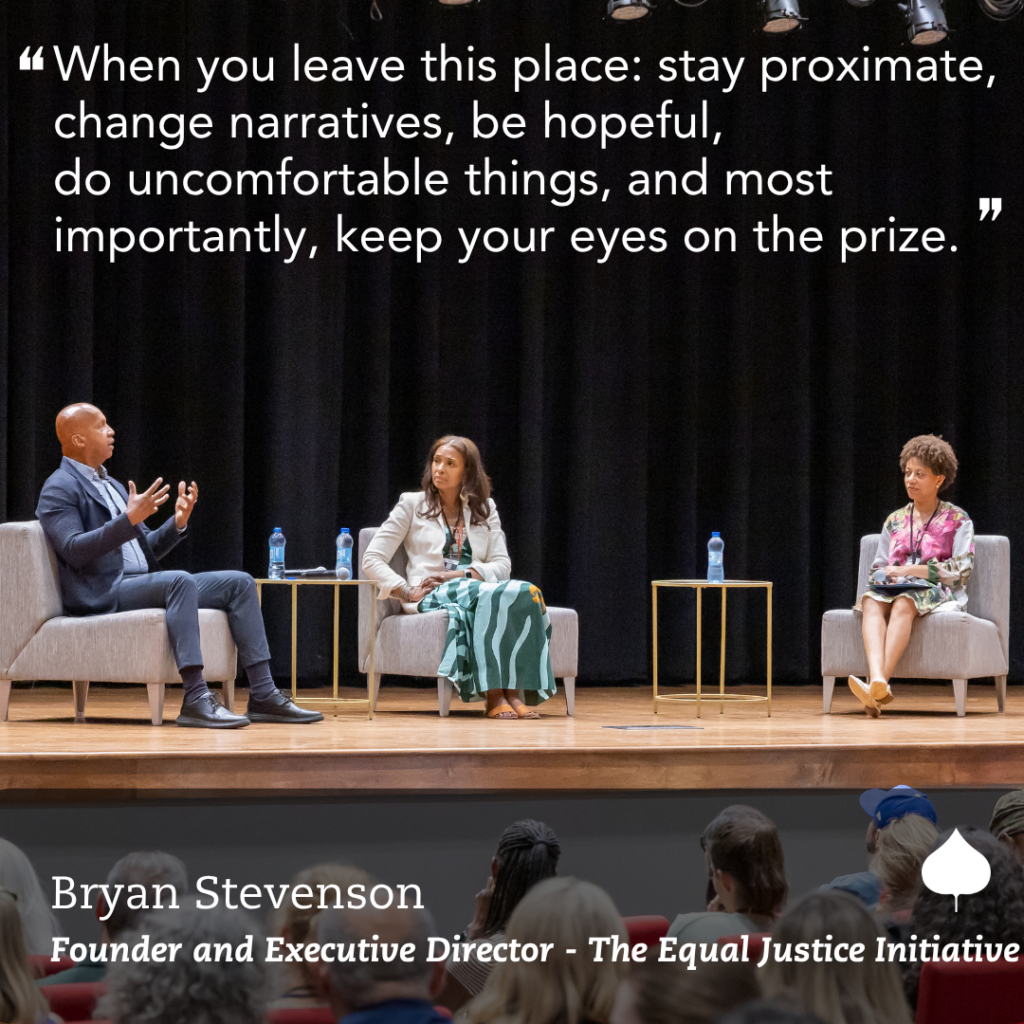
He captured this invitation with characteristic clarity:
“For us to do our work well, we have to constantly be looking for ways where we can be proximate to the poor, the marginalized, the neglected, those who are excluded.”
— Bryan Stevenson, Founder & Executive Director, Equal Justice Initiative (EJI)
The panel also challenged us to think differently about healing itself. They inferred that healing is not something that happens after justice has been achieved. It is part of how justice is built. Communities heal by telling the truth. Relationships heal through trust and accountability. Systems begin to heal when they are shaped by those whose voices have too often been ignored and excluded from having a seat and voice at the table.
Speaking to a room filled with leaders working across education, workforce development, philanthropy, youth organizing, public policy, and community partnerships, the message felt remarkably clear. If we hope to change systems, we cannot remain distant from the people living within them. If we hope to create opportunity, we must first understand what has prevented opportunity from being shared more equitably. And if we hope to build belonging, we must be willing to get proximate — because meaningful change begins with relationships rooted in trust, dignity, and our shared humanity.
The Journey Continues – From Montgomery to Hawai’i
The OYF continues this deeply transformative learning journey by reconvening its network later this Fall in Hawaiʻi. We do so by carrying forward the lessons Montgomery entrusted to us. We move from a place that called us to bear witness to one that will invite us to deepen our understanding of healing, restoration, culture, and our reciprocal relationship with one another and with place.
As we come together in Hawaiʻi, we carry that truth-telling forward into a shared exploration of restoration, repair, and reimagination. Here, we will reflect on the ongoing impacts of colonization and extraction while learning from Native Hawaiian wisdom and practices that center relationship, responsibility, belonging, healing, and collective care.
Together, these gatherings form something larger than a series of convenings. They represent a shared learning journey. One that begins with truth. One that moves toward healing.
The journey continues because the work continues. The work of telling fuller stories. The work of staying proximate. The work of strengthening relationships. The work of building communities where every young person belongs and thrives.
As we collectively reflect back as a network on our time together in Montgomery, we have encountered histories that were painful, courageous, unfinished, and profoundly human. We were reminded that democracy has never been sustained by ideals alone. It has always depended on ordinary people who chose to organize, to care for one another, to tell the truth, to challenge injustice, to serve as allies, and always held on to hope that a more just and equitable future is still possible.
“Gathering in Montgomery was such a profoundly emotional and moving experience, but at the end of it, my commitment to elevating human dignity through our work is higher than ever. It was so powerful to see people from all backgrounds, ages and parts of the country gather at the legacy sites in Montgomery! I am grateful to the OYF for helping us face our history as a country and for creating the space for a dialogue aimed at restoring truth and creating a better future!”
– Mamadou Ndiaye, Jobs for the Future
As our nation enters its next 250 years, perhaps that is the invitation before all of us.
To remember more honestly. To lead more courageously. To remain proximate to one another. And to continue writing a story expansive enough that every young person and community across the nation can see themselves within it.
Ultimately, the stories we choose to tell about our nation shape the future we are capable of building together.
May we always remember to share the stories of the Indigenous peoples who first called this land home, honor the stories of Black and African people whose resilience, perseverance, and the labor of their enslaved ancestors helped build this nation. May we continue to recognize the immigrants who contribute to shaping this country today, and redistribute power to young people across every community to have agency to co-author the next chapter of the American story.
The next chapter belongs to all of us.
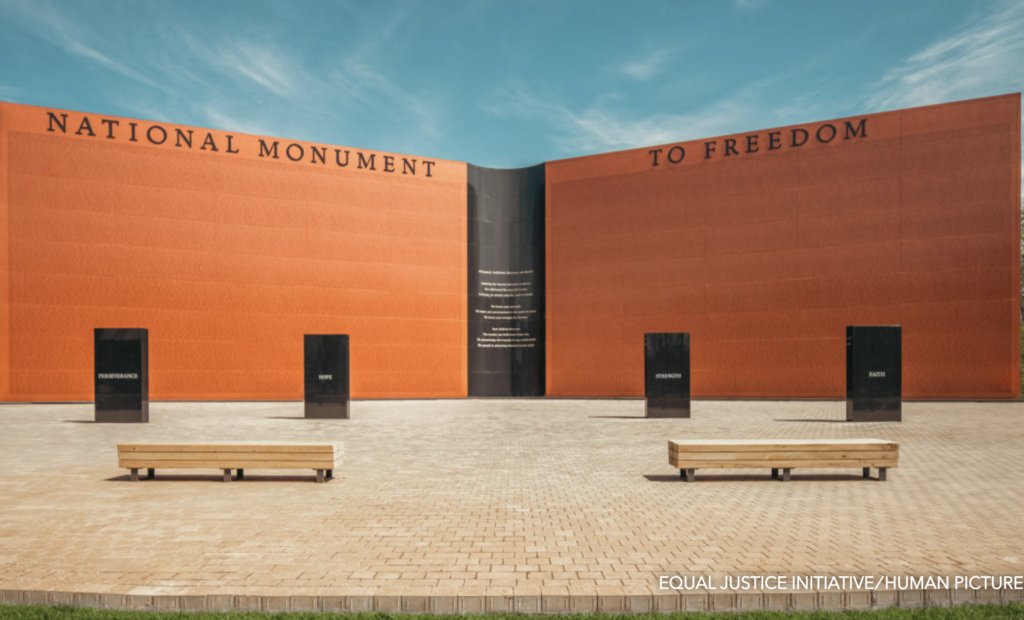
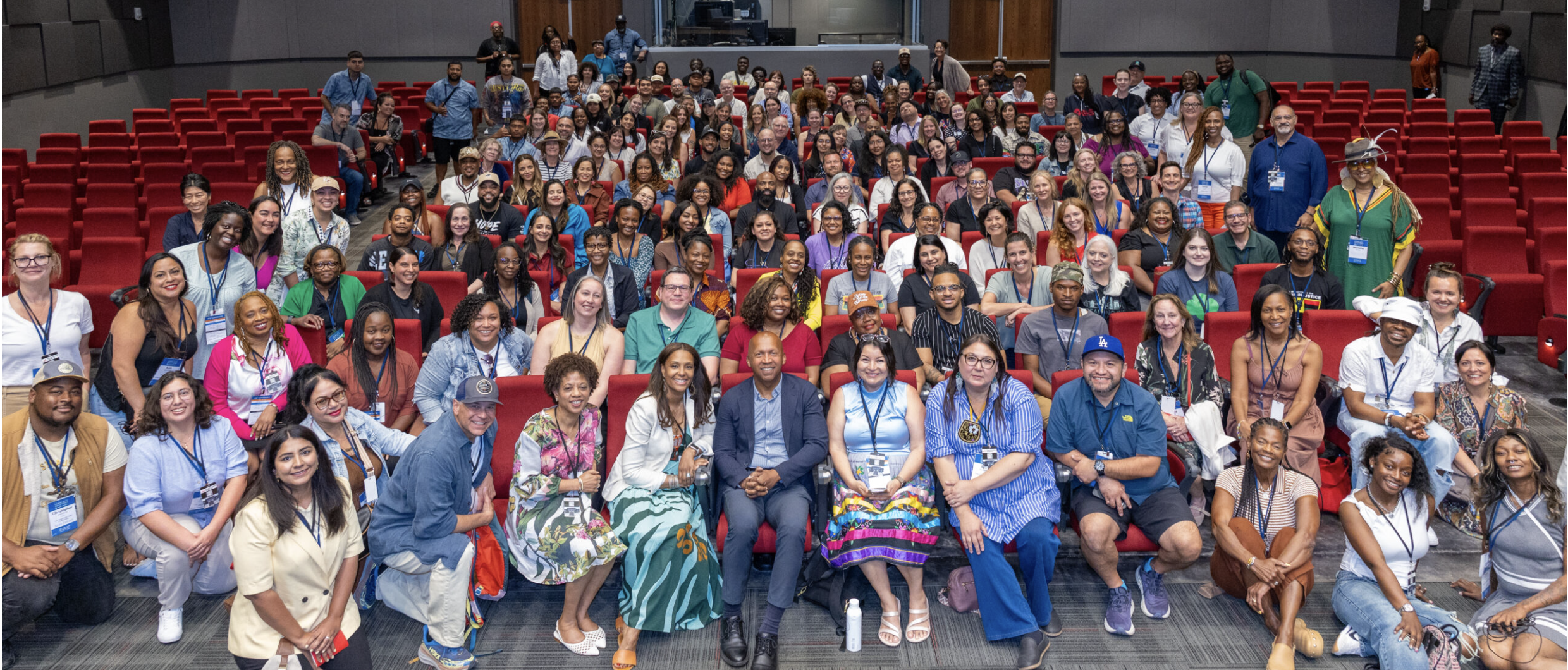
Montgomery, AL: The OYF National Network in community & conversation with Bryan Stevenson at the Legacy Sites