Blog Post
What Are You Teaching Me Today?
Part one of a series highlighting Newport Festivals Foundation’s internship program and broader Creative Youth Development work
Nancy Radwan was exploring options for summer work. She is passionate about film and filmmaking, but like so many others, she felt that the creative arts was not a viable career path. “I was following the same plan I followed in college, where I’m gonna pursue another career so I can do something else, and then eventually I’ll do film at some point,” she says. “But then I joined the festival, and I was like, oh, hell no. This is what I want to do.” She was dead tired from six full days of working on the camera crew at the Newport Folk and Jazz Festivals. She was also happy to the point of tears. “It gave me the confidence that I can actually do this.”
This was the inspiration she needed. The Newport Festivals Foundation team gave her the opportunity to experience working in a “live” stage environment at one of the most iconic festival venues in the country. Radwan spent the internship shadowing the video team: running camera cards backstage, learning how to operate the festival’s cameras, watching how producers and camera operators worked together under pressure. By the end of it, she had discovered her true purpose and the meaning behind all of the sacrifices and hard work.
Newport Festivals Foundation internship program is one example in a growing movement to demonstrate that festivals, theaters, and cultural venues can be untapped resources to explore pathways in the creative industries. Internships provide the kind of hands-on experience, especially valuable for opportunity youth, who often lack the professional networks and social capital that open doors in creative industries. It’s a bet that the Aspen Institute Forum for Community Solutions is making with its Creative Youth Development initiative alongside other core partners that include Newport Festivals Foundation, the Trombone Shorty Foundation, Aspen Jazz Snowmass, and others. A fundamental belief that the next generation of creative workers will come up through stages and backstages as much as classrooms.
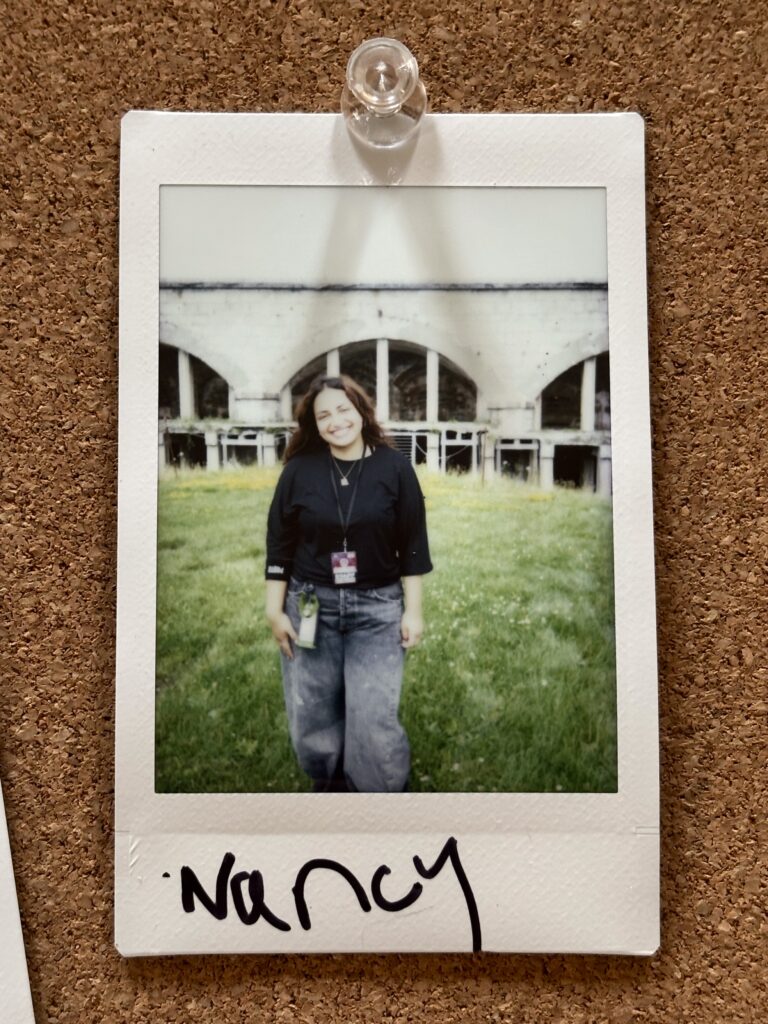
While internships in tech, media, and government are common, music festivals, museums and other cultural venues are less recognized as a training ground for the next generation of workers. But, Newport Festivals Foundation has quietly built one of the most effective internship programs in the country. Nancy Radwan’s experience is a great example of how work-based learning in a high-stakes, creative environment can guide young people towards purposeful work, while giving them the opportunity to acquire valuable skills. She wasn’t handed a syllabus. She didn’t follow a curriculum. She shadowed Chris, a festival producer, peppering him with questions about his choices. She watched camera operators closely enough to learn their instincts, not just their equipment. She was on call the whole time as a production assistant, and when a problem needed solving, she solved it. “You’re supporting people, and you’re learning from them at the same time,” she says.
By the second weekend, she’d shot multiple live sets herself, on stage and from the photo pit, and talked shop with one of the festival’s documentary directors about how to find the angle that makes a story interesting. “It completely changed how I think about the ideas I’d written down and never done anything with,” she says. “Suddenly they felt reachable.” She’d come in unsure what part of the industry she belonged in. She left certain: camera operating, with her own directing projects on the side.
It mattered, too, that the internship was paid. Radwan says she would have taken the opportunity either way — she wanted the experience badly enough. However, research from the Strada Education Foundation found paid internships linked to higher earnings a full year after graduation, while unpaid ones showed no earnings benefit at all. Additionally, Jobs for the Future (JFF) points out that more than 90 percent of employers say they prefer candidates with some kind of prior work experience, even for entry-level roles, which makes an internship one of the few ways into a field for someone without a credential. Between the driving and the long days, Radwan says, the paycheck was what made the whole thing sustainable rather than something only a student with a financial cushion could afford to do.
The singular question that guided Radwan’s summer internship was: “What are you teaching me today?” It became something of a running joke on set. It also worked. “Skilled people love talking about their work and how they got where they are,” she says. By the end of the festival, she had real relationships, not just contacts — a producer who told her to reach out anytime he’s shooting in New York, where she plans to move; a colleague already lining her up to help on a documentary. “It’s not transactional,” she says. “It only works if the relationship is real.”
Her advice to anyone interested in internships is less about technique and more about making authentic connections. Talk to people, even when it’s uncomfortable. Don’t treat the job description as a ceiling — ask to shadow things you weren’t assigned to. And, put the phone down long enough to be curious out loud. “Once someone tells you, ‘yes, ask us anything,’ it gives you the freedom to actually be curious,” she says. “That’s what every internship should do, in any field.”
Radwan’s six days suggest the bet was a good one. She showed up not knowing which part of the industry was her calling. She left with a plan, a network, and a story she’ll probably tell for years about the night nobody could find the person to bring up the lights — and she was already standing there.
Part two of this series will take a deeper dive into the Creative Youth Development work spearheaded by Dan Swain at the Newport Festivals Foundation. To learn more about Aspen’s Creative Youth Development work, visit our website or contact Frank Mirabal at [email protected].
.