Sharing My Story: Hannah Honani
Forum for Community Solutions
Hannah Honani, of the Hopi Foundation, shares her story about why she got involved with OY work.
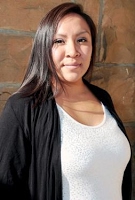
Hannah Honani, a program manager with the Hopi Foundation, has been working on opportunity youth issues since 2014. She is from the village of Sitsom’ovi, on the Hopi Reservation in northern Arizona, and comes from the roadrunner clan. In this Q&A with Forum for Community Solutions staff, she explains why she got involved in this work, and what inspires her to keep going.
FCS:
Why and how did you get involved in opportunity youth work?
Hannah: Every job that I’ve had was in the realm of helping youth. Working at our local high school as a paraprofessional, I learned that many of our kids learn differently and that there was a gap in us, as adults, to meet youth where they are at. Since being employed with the Hopi Opportunity Youth Initiative (HOYI), starting out as a Youth Liaison, I was exposed to a different approach and strategies to be able to reach our kids more intentionally and honestly. Working for a non-profit opens your eyes to many things you don’t normally get exposed to. The work is intense yet rewarding because you connect with your community on a real level where you understand your role as someone trying to make a difference in your own community, for your community, and with your community.
FCS:
Why is it important to provide professional development and leadership trajectories for young people to lead the work, and what types of supports have you received? What additional support do you think young people need?
Hannah: It’s so essential to allow leadership development in any capacity for students. There are many types of leaders and if youth can home in on their strengths or niche, they can better define their pathways of success. Leadership training will also assist youth to maneuver challenges and obstacles in any setting, by understanding how to communicate and recognize others communication and leadership styles. The support that I have been fortunate to receive while working for a native non-profit, are the exact training that I have mentioned but in a scaffolded approach where each training is built upon to provide deeper insight in facilitation, leadership traits, and effective communication.
Other support that would be helpful for youth is understanding self in all areas of well-being (mental, physical, emotional, spiritual, etc.). Understanding this will lead one to be an effective communicator, recognize obstacles, maneuver through hardships, and maintain a strong connection to who they are and where they come from.